

Types of Thyroid Cancer – Causes, Symptoms, and Treatment Options
Thyroid cancer is a condition that starts in the thyroid gland, a small butterfly-shaped gland located at the front of the neck. This gland plays a very important role because it controls metabolism, energy levels, and many body functions. Although thyroid cancer is not very common, it is one of the fastest-growing cancers today. Fortunately, when detected early, most types of thyroid cancer are highly treatable.
At Lapropodin – Nellai Laparoscopic, Tirunelveli, advanced diagnosis and modern treatment methods are available to manage thyroid cancer effectively. Now, let us clearly understand the types of thyroid cancer, their symptoms, and available treatments.
What Is Thyroid Cancer?
Thyroid cancer occurs when abnormal cells grow uncontrollably in the thyroid gland. Over time, these cells may form a lump or nodule. While many thyroid nodules are harmless, some may turn cancerous. Therefore, early evaluation is very important.
Moreover, thyroid cancer usually grows slowly. As a result, many patients do not notice symptoms in the early stages. However, regular health checkups can help in early diagnosis.
Main Types of Thyroid Cancer
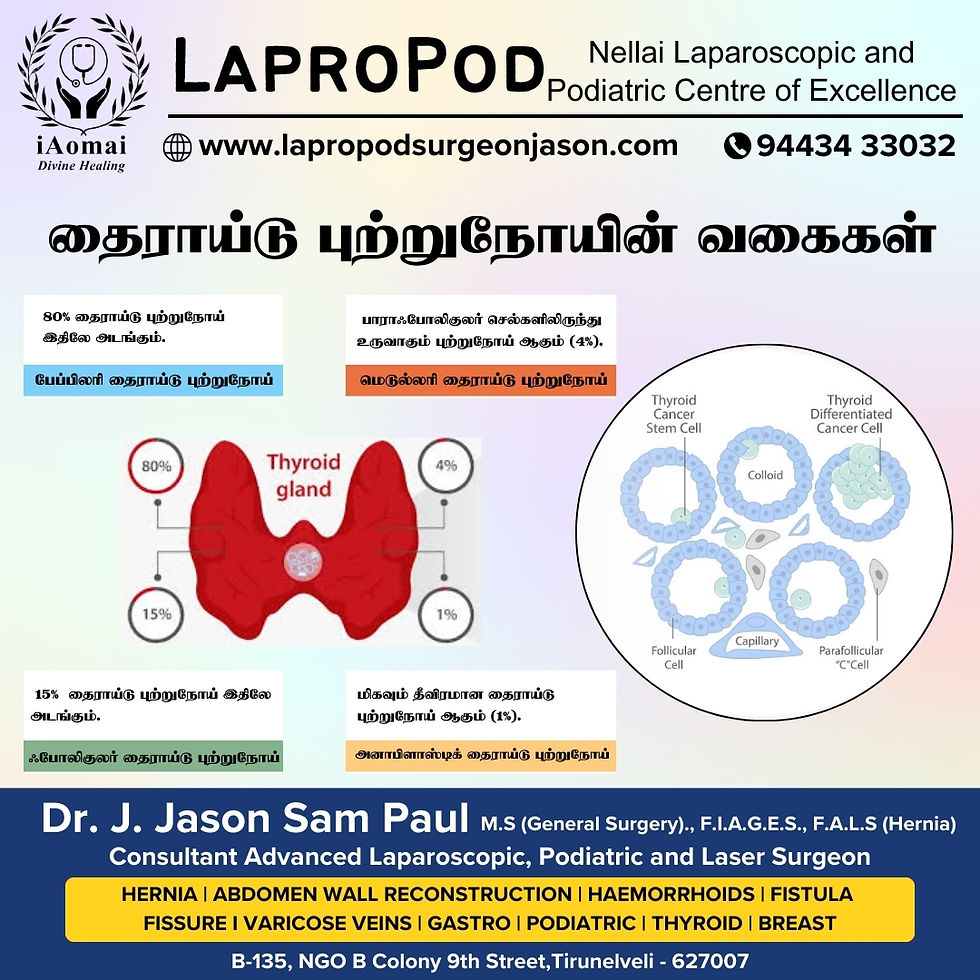
There are four main types of thyroid cancer. Each type differs in growth rate, severity, and treatment approach. Let us look at them one by one.
1. Papillary Thyroid Cancer
Papillary thyroid cancer is the most common type, accounting for nearly 80% of all thyroid cancer cases. It usually develops slowly and often affects younger adults.
Key Features:
Grows very slowly
Common in women
Often spreads to nearby lymph nodes
Has a very high cure rate
Symptoms:
Small lump in the neck
Painless swelling
Mild voice changes
Enlarged lymph nodes
Treatment:
Papillary thyroid cancer is usually treated with thyroid surgery, often followed by radioactive iodine therapy. With early diagnosis, long-term survival rates are excellent.
2. Follicular Thyroid Cancer
Follicular thyroid cancer is the second most common type. Compared to papillary cancer, it may spread to blood vessels and other organs such as lungs or bones.
Key Features:
Slightly faster growth than papillary cancer
More common in older adults
Higher risk if iodine levels are low
Symptoms:
Neck swelling
Difficulty swallowing
Pain in the neck
Breathing problems in advanced stages
Treatment:
Treatment usually includes laparoscopic or minimally invasive thyroid surgery, followed by radioactive iodine therapy when required. Early treatment ensures better outcomes.
3. Medullary Thyroid Cancer
Medullary thyroid cancer develops from special thyroid cells called C cells, which produce calcitonin hormone. This type may be inherited in some families.
Key Features:
Accounts for about 5–10% of cases
May run in families
Does not respond to radioactive iodine
Symptoms:
Neck lump
Diarrhea
Flushing of the face
Hoarseness of voice
Treatment:
The main treatment is complete surgical removal of the thyroid gland. Genetic testing may also be advised for family members.
4. Anaplastic Thyroid Cancer
Anaplastic thyroid cancer is the rarest and most aggressive type. It usually affects older adults and grows very rapidly.
Key Features:
Fast-growing and aggressive
Difficult to treat
Requires immediate medical attention
Symptoms:
Rapid neck swelling
Severe breathing difficulty
Pain in the neck
Sudden voice changes
Treatment:
Treatment may include surgery, radiation therapy, and chemotherapy. Early diagnosis and expert care are critical in managing this condition.
Common Symptoms of Thyroid Cancer
Although symptoms may vary, some common warning signs include:
Lump or swelling in the neck
Difficulty swallowing or breathing
Hoarse voice
Neck pain
Persistent cough without cold
If you notice any of these symptoms, it is important to consult a specialist immediately.
Diagnosis of Thyroid Cancer
At Lapropodin – Nellai Laparoscopic, Tirunelveli, advanced diagnostic methods are used, such as:
Thyroid ultrasound
Fine Needle Aspiration Biopsy (FNAB)
Blood tests
CT or MRI scans
These tests help in identifying the type and stage of thyroid cancer accurately.
Thyroid Cancer Treatment at Lapropodin – Nellai Laparoscopic
Modern thyroid cancer treatment focuses on precision, safety, and faster recovery. Laparoscopic thyroid surgery offers many benefits, such as:
Smaller cuts
Less pain
Minimal scarring
Faster healing
Short hospital stay
Additionally, personalized treatment plans ensure the best results for every patient.
Why Choose Lapropodin – Nellai Laparoscopic, Tirunelveli?
Experienced laparoscopic specialists
Advanced diagnostic facilities
Minimally invasive thyroid surgery
Patient-friendly care approach
High success rate with faster recovery
Therefore, patients receive both expert treatment and compassionate care under one roof.
Conclusion
In conclusion, understanding the types of thyroid cancer helps in early detection and timely treatment. While some types grow slowly and are highly curable, others need urgent medical care. Hence, regular checkups and early consultation play a key role in successful recovery.
If you or your loved ones experience any thyroid-related symptoms, consult Lapropodin – Nellai Laparoscopic, Tirunelveli for expert guidance and advanced treatment options.
Advanced Laparoscopic,
Podiatric and Laser Surgeon
M.S (General Surgery)., F.I.A.G.E.S., F.A.L.S (Hernia)
HERNIA | ABDOMEN WALL RECONSTRUCTION | HAEMORRHOIDS | FISTULA
FISSURE I VARICOSE VEINS | GASTRO | PODIATRIC | THYROID | BREAST
For More Details
Dr. J. Jason Sam Paul
B-135, NGO B Colony 9th Street,
Tirunelveli - 627007
94434 33032
For Whatsapp Click The Bellow Link
#ThyroidCancer #ThyroidHealth #ThyroidAwareness #ThyroidTreatment #LaparoscopicSurgery #MinimallyInvasiveSurgery #NeckHealth #CancerAwareness #MedicalCareTirunelveli #LapropodinTirunelveli #ThyroidCheckup #EarlyDetection #PapillaryThyroidCancer #FollicularThyroidCancer #MedullaryThyroidCancer #AnaplasticThyroidCancer #HealthyLife #CancerCare #TirunelveliHealthcare #ThyroidSpecialist


Comments